
Why Small-Market Clubs Outperform Big Cities in European Basketball
By Hoop Britain Research
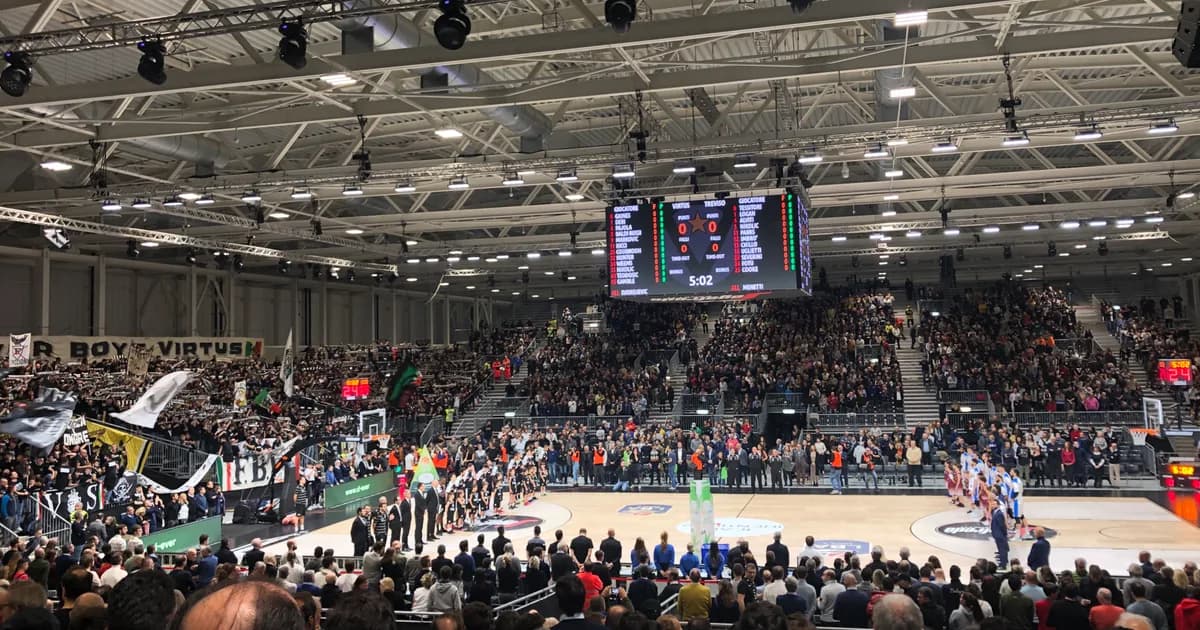
TL;DR: Kaunas (305,000 people) and Vitoria-Gasteiz (255,000) post better fill rates than Madrid, Barcelona and Milan — cities 10 to 20 times their size. NBA Europe is betting $500 million-plus per franchise on the opposite assumption: that media-market size predicts basketball demand. European basketball's own data says that bet is far from safe.
The Comparison That Should Worry NBA Europe's Investors
| Club | Home City Population | Arena Capacity | 2023-24 EuroLeague Fill Rate |
|---|---|---|---|
| Partizan Belgrade | ~1.4M | 20,094 | 99% |
| Žalgiris Kaunas | ~305,000 | 15,415 | 96% |
| Crvena Zvezda Belgrade | ~1.4M | 20,094 | 95% |
| Panathinaikos Athens | ~3.2M | 18,300 | ~100%* |
| FC Bayern Munich | ~1.5M | 11,500 | 94.5% |
| FC Barcelona | ~1.6M | 7,585 | ~82% |
| Real Madrid | ~3.4M | 13,109 | 68% |
| Saski Baskonia (Vitoria-Gasteiz) | ~255,000 | 15,504 | 64%** |
| EA7 Olimpia Milan | ~1.4M | 12,700 | 47% |
*Panathinaikos figure from post-renovation 2025-26 season pricing data; see EuroLeague Ticket Prices by Club. **Baskonia's EuroLeague fill rate trails its own Liga ACB attendance and its all-time single-game record (15,544, a sellout) — a smaller media market with real, provable demand ceilings tied to event programming rather than basic interest.
There is no relationship in this table between city size and fill rate. Kaunas, a city smaller than most London boroughs, outperforms Milan, Barcelona and Madrid combined. Belgrade — a single city with two clubs sharing one arena — produces the two highest attendance figures in the sport.
Why This Happens
Basketball is a bigger deal, relatively, in a smaller sporting market. In Kaunas, Belgrade and Vitoria-Gasteiz, there's no Premier League-scale football competing for the same disposable entertainment spend and civic identity. In Madrid, Barcelona and Milan, basketball is competing directly against globally dominant football clubs for the same fans, the same media coverage, and often the same ownership attention — Real Madrid's basketball section is explicitly run as a "brand prestige asset" subsidized by the football club, not as a business that needs to stand on its own (see Real Madrid and Barcelona: The Multi-Sport Blueprint).
Scarcity is engineered, not accidental. Partizan deliberately caps season-ticket sales below its arena's full capacity specifically to protect single-game yield; Žalgiris caps season tickets at 4,500 out of 15,415 seats for the same reason. Real Madrid and Barcelona, by contrast, bundle EuroLeague access into multi-competition season passes that dilute the urgency of any single European fixture. Deliberately created scarcity outperforms accidentally under-filled inventory every time.
A well-run small club beats a badly-optimized big one. Vitoria-Gasteiz's Baskonia pairs games with full arena concerts specifically because it knows basketball alone won't fill a 15,500-seat building 35 times a season in a market that size — and by its own account, that program now drives over half its new season-ticket sign-ups. See Arena Ownership Is the Real NBA Advantage — and Baskonia Already Proved It Works in Europe for the full mechanics.
The Direct Read-Across to NBA Europe
NBA Europe's 12 permanent-franchise targets — London, Paris, Berlin, Madrid, Milan, Munich, Rome, Manchester, Istanbul, Athens — were selected overwhelmingly on media-market and corporate-wealth criteria (see NBA Europe Explained). None of Kaunas, Vitoria-Gasteiz or Belgrade appears on that list, despite being demonstrably stronger basketball markets by the only metric that actually predicts gate revenue: whether people show up.
That's not necessarily a mistake — media-market size does predict broadcast and sponsorship revenue even where it doesn't predict attendance, and NBA Europe is a broadcast-and-sponsorship business first. But it is a genuine, evidenced risk that at least some of NBA Europe's $500 million-plus franchises will land in cities where football's grip on the sporting calendar is simply too strong for a new basketball product to break — the same problem Real Madrid and Barcelona's basketball sections already live with every day, just without an NBA-sized marketing budget to paper over it.
This piece is part of our ongoing NBA Europe vs EuroLeague business playbook.
Sources: EuroLeague official attendance records, club-reported city population and arena capacity figures, and the case-study articles linked above — each carries its own full citation list. Accurate as of September 22, 2026.