
Partizan vs Red Star: Turning a Belgrade Rivalry into Revenue
By Hoop Britain Research
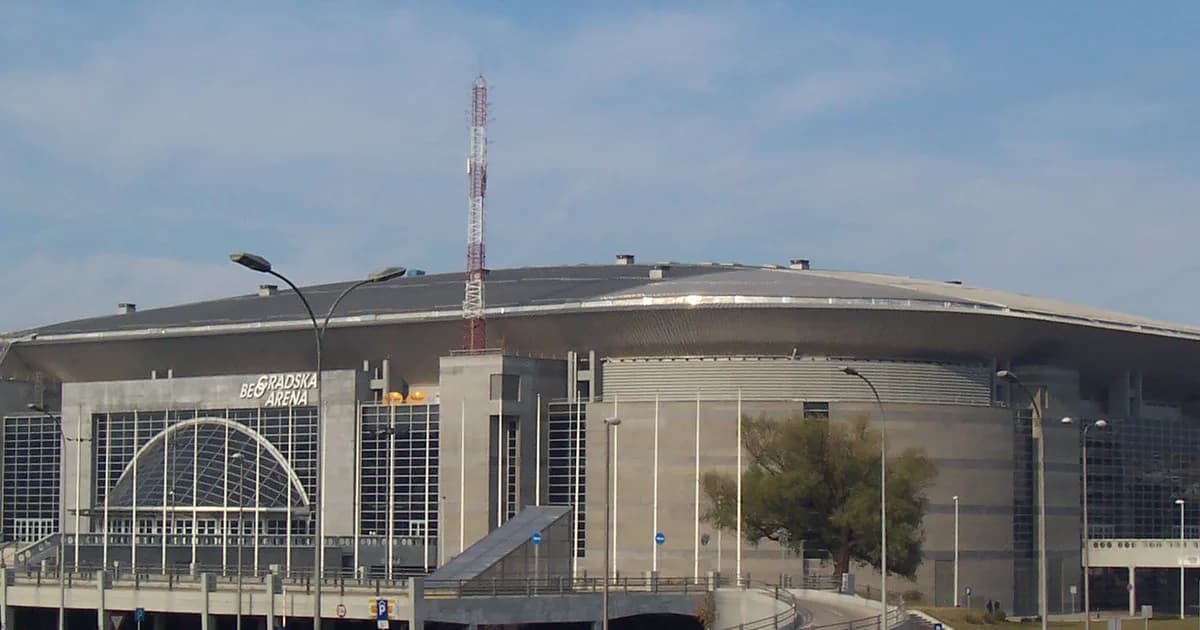
TL;DR: Two clubs, one 20,094-seat arena, a shared city of 1.4 million people with a fraction of Western Europe's disposable income — and between them, Partizan and Crvena Zvezda post two of the highest attendance figures in world basketball. Belgrade is the clearest proof in European basketball that fan intensity, not GDP, drives commercial success.
The Numbers Behind "The Eternal Derby"
KK Partizan posted the single highest average home attendance in European basketball history: 19,916 fans per game across the 2023-24 EuroLeague season, a 99% fill rate of the 20,094-seat Belgrade Arena. Crvena Zvezda (Red Star), which relocated from the smaller 8,000-seat Pionir hall to share the same arena that same season, averaged 17,842 (95% fill rate) — and in February 2024 hosted FC Barcelona in front of 20,875 fans, the single highest attendance recorded anywhere in EuroLeague that season. Two clubs in one mid-sized city combined for over 37,000 fans on a single EuroLeague round — a concentration of demand no other market on the continent matches, in an economy far poorer than Western Europe's basketball capitals.
Membership as Gatekeeping, Not Just Loyalty
Both clubs use mandatory paid membership as a rationing mechanism for scarce tickets, not just a loyalty perk. Partizan's Članska Karta (roughly €17-26 for a base adult tier) is a hard prerequisite for buying a season pass or getting priority access to individual EuroLeague tickets. Red Star's Članarina (around €15/year) is tied to the wider multi-sport SD Crvena Zvezda association and confers actual constitutional voting rights in the club's general assembly, plus cross-promotional ticketing with the football team at the Marakana. Neither club could sustain 95%+ fill rates at this scale without a structured system for allocating access — a genuinely different problem from a Western European club trying to find enough demand to fill its building.
The Sponsorship Fight Nobody Else Has
In 2022, Partizan signed a landmark shirt-and-naming deal with Serbian betting company Mozzart Bet — reported as one of the largest sports sponsorship agreements in Western Balkan history. Red Star answered in January 2023 with its own multi-year Meridianbet naming deal, explicitly competing head-to-head for the same regional gambling-sponsorship market. Both clubs' 2024-25 gross budgets sit around €22-23 million, funded overwhelmingly by gate receipts (€7-8.5 million for Partizan alone) rather than the broadcast money that dominates Western European club finances — a structural reason both clubs care so intensely about keeping their arena full every single night.
When Fan Passion Becomes Literal Crowdfunding
Facing a roughly €7.5 million historical tax liability, Partizan's leadership launched a direct, transparent crowdfunding campaign — Jedan Partizan Imamo ("We Have One Partizan") — asking supporters to donate directly into a ring-fenced account. Fans and board members raised over €1.67 million, with donors recognized via commemorative arena plaques. It's an extreme version of fan monetization no Western European club has needed to attempt, and it only works because the emotional stake fans have in the club is genuinely that high.
The Takeaway for NBA Europe's City Bets
Neither Partizan nor Red Star sits on NBA Europe's list of target cities — Belgrade isn't a "Tier-1 commercial hub" by media-market standards. But by attendance, atmosphere and gate revenue relative to city wealth, it's arguably the single strongest basketball market in Europe. That's the exact tension explored in Why Small-Market Clubs Outperform Big Cities in European Basketball — and it's a genuine risk for any NBA Europe franchise betting purely on London-, Paris- or Berlin-sized media markets rather than basketball-mad ones.
This piece is part of our ongoing NBA Europe vs EuroLeague business playbook. For how this compares to Europe's other great small-market outperformer, see How Žalgiris Kaunas Sells Out Every Game in a City of 300,000.
Sources: EuroLeague official attendance records, BasketNews EuroLeague budget reporting, Eurohoops, Mozzart Sport, B92, Wikipedia (KK Crvena Zvezda). Accurate as of September 22, 2026.