
What Basketball Clubs Can Learn from Football's Matchday and Sponsorship Model
By Hoop Britain Research
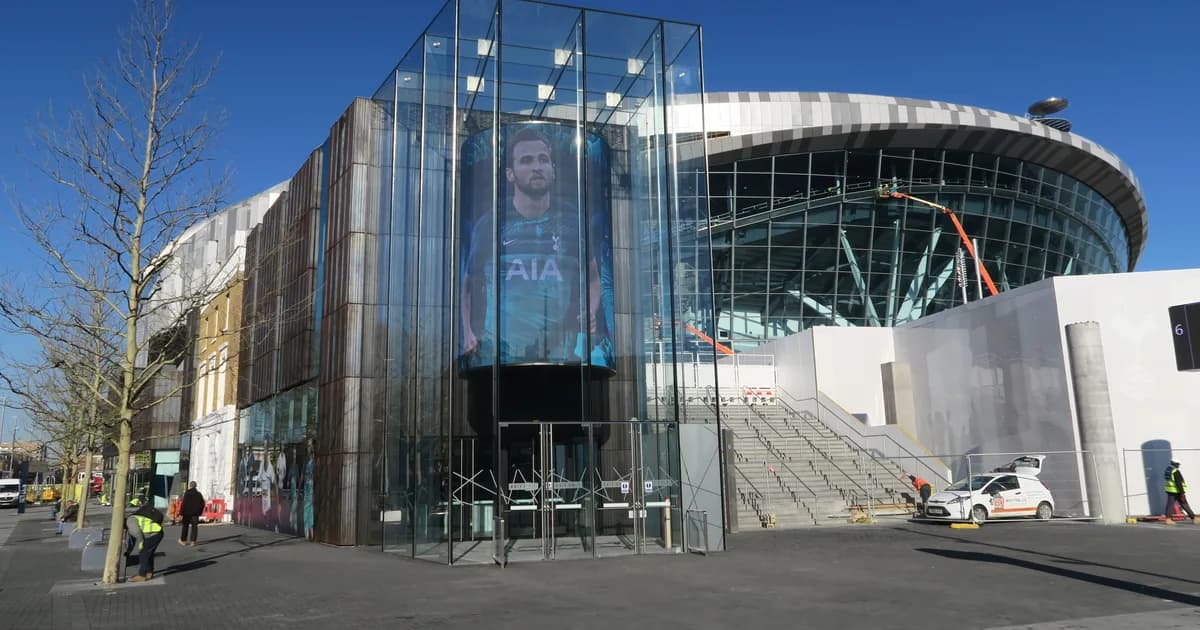
TL;DR: Tottenham Hotspur redesigned its stadium to make fans linger an hour longer and out-earned Manchester United's much bigger Old Trafford on matchday revenue. Eintracht Frankfurt built its own tech subsidiary to kill concession queues with AI. Barcelona turned its shirt sponsor into a rotating music-label collaboration. None of these ideas need a basketball-specific arena to work.
Tottenham Hotspur: Engineering the Concourse Into a Business
When Tottenham Hotspur opened their 62,850-seat stadium in 2019, architects Populous designed it around fan dwell time, not just capacity. The single-tier South Stand seats 17,500 fans at a steep 34-degree angle for atmosphere, but the real commercial innovation sits underneath it: a five-story food hall with Europe's longest continuous bar, an on-site microbrewery with Beavertown that produces up to a million pints a year, and high-speed "Bottoms Up" dispensing systems that fill a pint through the base of the cup in under four seconds.
The result: fans arrive over an hour earlier and stay well past full time. In the 2022/23 season, Tottenham generated £117.6 million in matchday revenue — more than Manchester United pulled from the 74,000-seat Old Trafford, a stadium with 12,000 more seats. The lesson isn't "build a brewery" — it's that eliminating service bottlenecks and giving fans somewhere worth staying converts directly into per-capita spend, independent of arena size. That's directly relevant to EuroLeague venues like the Belgrade Arena or Žalgirio Arena, which post some of the best in-bowl atmospheres in world sport (see EuroLeague Ticket Prices by Club) but still largely treat the concourse as a corridor rather than a revenue center.
Eintracht Frankfurt: AI Against the Queue
Operating under Germany's fan-ownership rules, Bundesliga club Eintracht Frankfurt couldn't just outspend its way to a better matchday experience — so it built its own technology subsidiary, EintrachtTech, instead. Working with Cognizant, the club installed computer-vision sensors at concession kiosks across its 60,100-seat stadium that estimate real-time queue wait times with over 90% accuracy, broadcasting them to concourse screens and the club's own app. Cutting visible queue friction increased revenue per order by up to 15% across the stadium's 200 points of sale.
For a EuroLeague arena, this is a far cheaper fix than a full stadium rebuild: the technology is a vendor partnership, not new construction, and it works inside an existing municipal arena a club doesn't even own.
Barcelona x Spotify: The Shirt as a Cultural Drop
Front-of-shirt sponsorship used to mean one static logo for three years. Barcelona and Spotify broke that by turning the men's and women's kit into a rotating collaboration platform tied to major music releases — Drake, Rosalía, the Rolling Stones, Karol G, Travis Scott — timed around marquee fixtures like El Clásico. The Rosalía-themed jersey, priced at €399 (with a €1,999 signed collector box), sold out within 24 hours.
This is directly portable to a EuroLeague derby. Panathinaikos vs. Olympiacos or Partizan vs. Crvena Zvezda already generate the kind of cultural intensity a music or streetwear brand would pay to be associated with — see Partizan vs Red Star: Turning a Belgrade Rivalry into Revenue for how seriously those two clubs already monetize derby day. A limited, numbered kit collaboration for one fixture a season is a retail event, not a sponsorship line item, and it reaches an audience that follows streetwear rather than basketball box scores.
The Common Thread
None of these three ideas required a bigger arena, a bigger media deal, or a bigger transfer budget — they required treating the 90 minutes (or 40 minutes) around the game itself as a design problem. That's precisely the space where a EuroLeague club with a fixed, sometimes ageing arena — think FC Barcelona's own 7,585-seat Palau Blaugrana — can compete on execution even without NBA Europe's arena-construction budget.
This piece is part of our ongoing NBA Europe vs EuroLeague business playbook. For more crossover tactics from outside football, see F1 and Esports Fan-Engagement Tactics European Basketball Should Steal, and for the fuller NBA comparison, 10 Things the NBA Does Better Than EuroLeague.
Sources: BuroHappold Engineering, Populous stadium case studies, Cognizant/EintrachtTech case study, Behind Sport and Goal.com reporting on the Barcelona x Spotify partnership. Accurate as of September 22, 2026.